How Parabolik makes DeFi accessible to mainstream U.S. investors
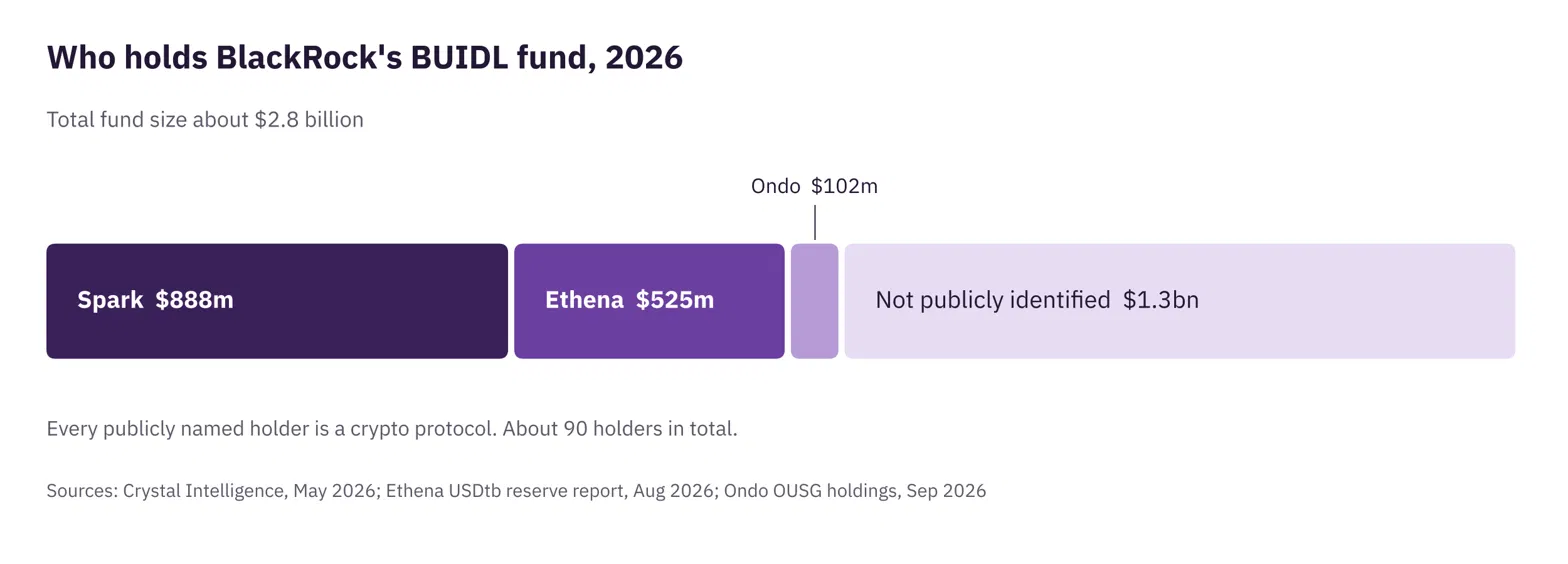
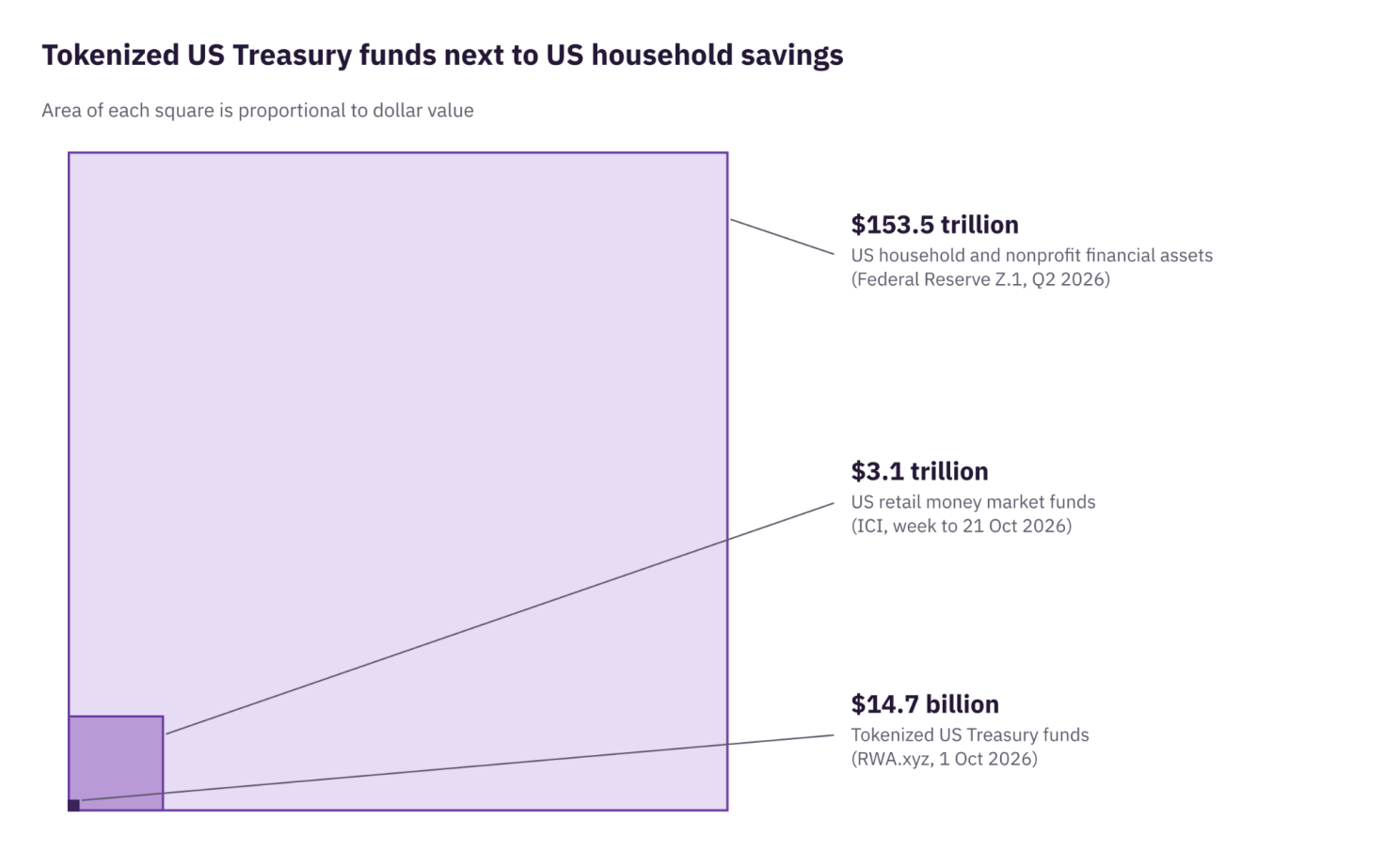
Since the first security token offerings in 2017, the big promise of tokenization has been to bring the US general public and traditional finance on-chain. As of 1 October 2026, tokenized US Treasury funds hold about $14.7 billion across 85,780 holders, and the first group to benefit has been crypto natives. Before tokenization, a crypto protocol holding stablecoins had no simple on-chain way to earn the risk-free rate on US Treasuries or money market funds. Tokenized versions gave it that access. As of summer 2026, Ethena (USDe issuer), Spark (formerly Maker-DAO) and Ondo together held $1.5 billion of BlackRock's BUIDL fund, which is roughly half of the total. In each case, the capital was already on-chain, and just moved out of stablecoins and into Treasury exposure.
The vast majority of on-chain assets are funded by crypto natives: people, funds and protocols that already hold crypto. Their capital grows in a bull market and shrinks in a bear one, and on-chain asset growth moves with it. The savings and investments of the US general public, held at banks, brokers and asset managers, are far larger, and none of that money depends on where the crypto cycle is. Bringing even a small part of it on-chain is what would enable on-chain assets to grow independent of the cycle. That is the challenge this piece is about. This piece looks at native tokenization of crypto fund strategies, which already trade on-chain, as a way to give the US general public access and scale on-chain assets.
For most US investors there is no access to fund strategies today. Hedge funds are generally accessible only to accredited investors, and only about 18.5% of US households qualified in 2022, according to SEC staff. Those that qualify face minimums that often start at $100,000, as well as challenging lockups, making them illiquid investments. Wealth and brokerage platforms, where the US general public already invests, pursue new products to list but have no operational way to add fund strategies. Emerging managers with working strategies cannot raise from smaller investors.
Native tokenization can bring simplicity and ease of access to fund strategies, through the same wealth management platforms, exchanges, neobanks, and RIAs the US general public already knows and uses. Because each strategy is fully digitized and connected through an API, a platform also gets direct access to the strategy's reporting, NAV and other data it needs. Distributing and scaling a strategy gets much simpler for the manager, so what sets a manager apart is increasingly the investment thesis and how they trade it.
Why hybrid tokenization has not brought the US general public on-chain at scale
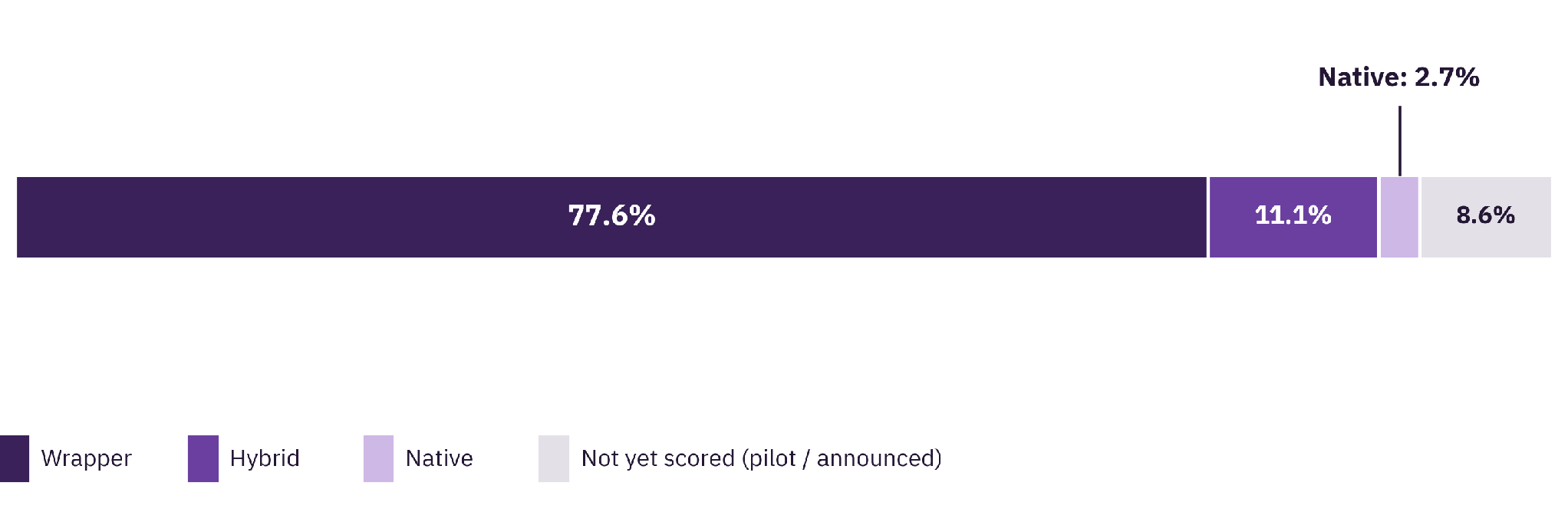
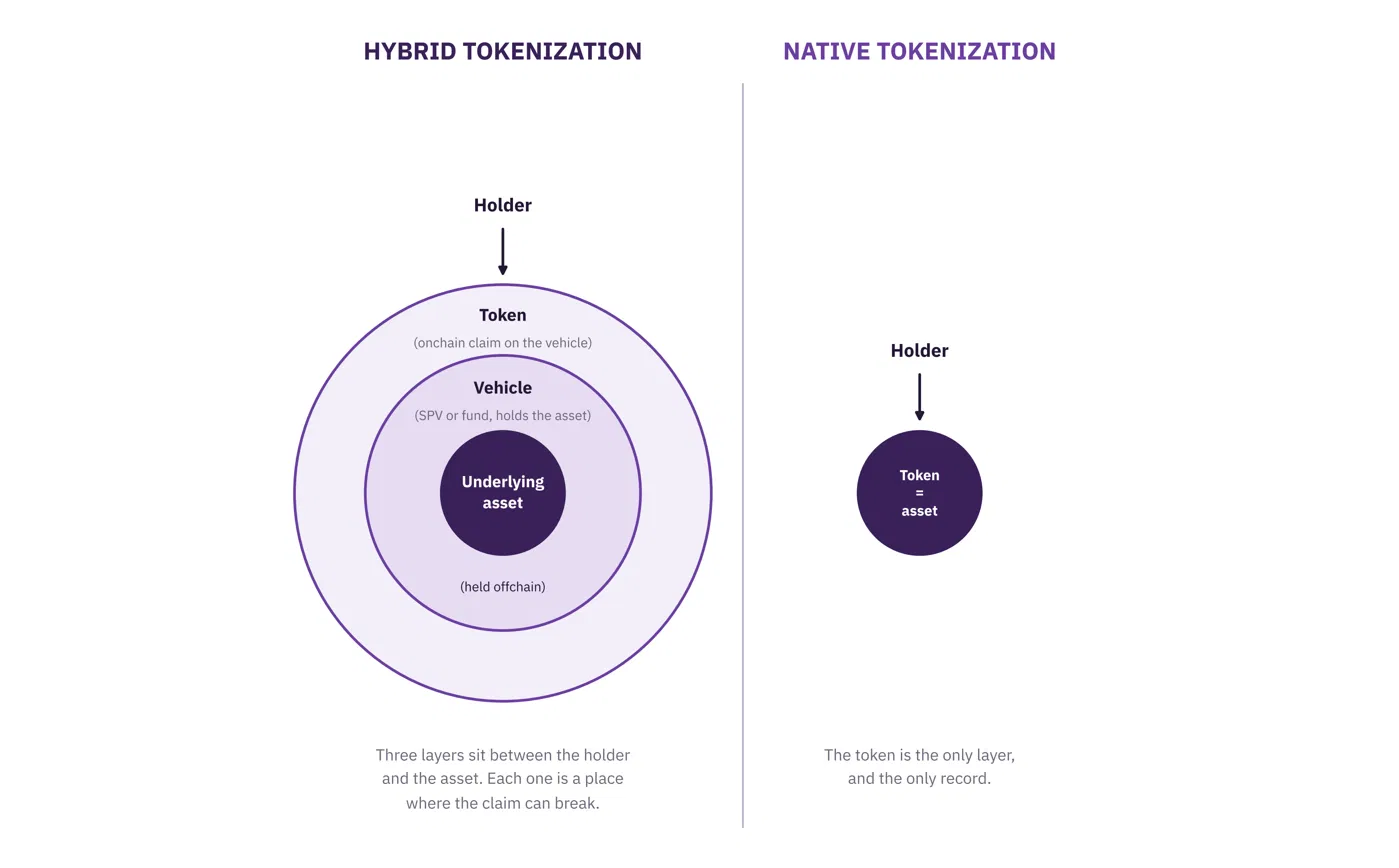
Most tokenization today is hybrid: a token sitting on-chain on top of a vehicle that holds the real asset off-chain. This covers what Pantera calls "wrappers and hybrids". Of the 542 tokenized assets Pantera Capital scored in its Q1 2026 report, only 2.7% are native, defined as the token is the asset and the chain is the sole record.
Hybrid tokenization gives a crypto native access to a Treasury bill. The US general public can already own that bill through a regular brokerage account, without the extra counterparty risk the tokenization adds, so the token gives them nothing new. What it does add is an issuer, a custodian or SPV, a second record to keep in line with the first, and a fresh legal review for every token, since each issuer builds its own legal vehicle. SEC staff noted in January 2026 that holders of third-party tokenized securities can face risks, such as the issuer's bankruptcy, that a holder of the underlying security would not.
How this changes with native tokenization
With native tokenization the strategy uses the blockchain for more than recording a claim. It is fully digital, its holdings, NAV and ownership records sit on one ledger that the investor and the platform can both check, and positions can be managed at any hour, as far as the strategy's liquidity allows. There is no separate vehicle or SPV between the investor and the asset, so the investor does not take on the additional counterparty risk or cost that hybrid tokenization brings.
For fund strategies, access is the bigger change. Unlike a Treasury bill, the US general public cannot already buy them through a brokerage account. Eligibility is a barrier.
With native tokenization, the investor’s assets participate in the strategy directly instead of being an interest in a fund. With no fund wrapper around the strategy, the record keeping operates automatically on the ledger for each user and each strategy, and a wealth platform, RIA or exchange can make the strategy accessible to both existing and new users. Investors stay on the platform they already use, and the capital they allocate works on-chain. Here lies the difference between a manager launching a hedge fund in which investors subscribe, versus fund managers sending strategy signals to a vault, which accepts deposits from U.S. investors through the apps they use and operates each investor’s collateral automatically.
Where Parabolik starts: native crypto fund strategies
Originate the strategy natively. Managers launch their strategy directly on Parabolik's infrastructure, so it begins on-chain rather than being wrapped after the fact as hedge funds currently are, which is what hybrid tokenization does. Parabolik coined this Strategy-as-a-Product: each strategy is one vault, a smart contract that holds investors' spot positions under a defined set of rules set by the manager. When an investor deposits, vault tokens are minted on-chain for that deposit and sent to the depositor’s wallet, so the vault is the single record of each investor’s holdings, and its positions, NAV and per-investor reporting sit on the same ledger. A wealth platform, RIA, neobank or exchange connects to that record through one API and can list every strategy on Parabolik’s Platform the same way.
Once a vault launches, its contracts, parameters and venue connections cannot be changed by a manager, an administrator or Parabolik itself. Assets in a vault can only go to the trading venues set at launch or back to the investor on redemption. Without a key, there's nothing for an attacker to compromise. This is important because, according to Chainalysis, key and signer compromise was the largest source of stolen crypto assets in 2024 and 2025. The contracts implement ERC-7540, an established extension of the ERC-4626 vault standard, and are audited before going live.
Hybrid tokenization was a reasonable first step. It records a claim to an off-chain asset on-chain, and its first users at scale were crypto natives looking for Treasury and money market exposure. The next stage depends on strategies that are native from the start and available on the wealth platforms, RIAs, neobanks and exchanges where the US public already invests. Parabolik is bringing that infrastructure to market, starting with crypto fund strategies.
Sources
RWA.xyz, Tokenized US Treasuries dashboard (data as of October 1, 2026). https://app.rwa.xyz/treasuries
crypto.news, "Ethena Labs mints $225M of BlackRock's BUIDL tokens, now holding $1.29B" (March 26, 2025). https://crypto.news/ethena-labs-mints-225m-of-blackrocks-buidl-tokens-now-holding-1-29b/
Decrypt, "Spark Commits Additional $1 Billion to Lead Tokenized Treasuries Sector" (May 2025). https://decrypt.co/318035/spark-commits-additional-1-billion-to-lead-tokenized-treasuries-sector
Pantera Capital, State of Tokenization, Q1 2026. https://panteracapital.com/wp-content/uploads/2026/05/State-of-Tokenization-Q1-2026-Pantera-Capital.pdf
SEC staff, Statement on Tokenized Securities, January 28, 2026. https://www.sec.gov/newsroom/speeches-statements/corp-fin-statement-tokenized-securities-012826-statement-tokenized-securities
Chainalysis, 2025 Crypto Crime Report Introduction. https://www.chainalysis.com/blog/2025-crypto-crime-report-introduction/
Chainalysis, "2025 Crypto Theft Reaches $3.4 Billion". https://www.chainalysis.com/blog/crypto-hacking-stolen-funds-2026/
SEC staff, Review of the "Accredited Investor" Definition under the Dodd-Frank Act (December 2023). https://www.sec.gov/files/review-definition-accredited-investor-2023.pdf
Lambert, Liebau and Roosenboom, "Security token offerings", Small Business Economics (2022). https://link.springer.com/article/10.1007/s11187-021-00539-9

Parabolik